Apple HomeView vs Echo Show (2026): Why Apple’s A18 Display Replaces the Kitchen iPad

If you walk into almost any modern household today, you will likely spot a familiar, slightly clumsy sight on the kitchen counter: an old, beat-up iPad propped up against a fruit bowl or a blender stand. Millions of families tried to turn the iPad into a dedicated kitchen computer—using it for recipe videos, timers, Spotify playlists, and checking the front door camera.
Yet anyone who has tried this knows the daily frustrations: the battery dies right when your hands are covered in flour, the screen goes to sleep every three minutes, fingerprint smudges ruin the display, and the tablet’s tinny speakers are completely drowned out by a boiling tea kettle. Meanwhile, alternatives like the Amazon Echo Show have alienated users by turning their kitchen counters into billboards for sponsored ads, trending celebrity gossip, and unsolicited product recommendations.
Following our recent reviews of how Meta Ray-Ban smart glasses are replacing phone screens and how professionals are using vibe coding to build software, Apple has officially entered the smart home hardware arena with the Apple HomeView. Powered by the flagship A18 processor and designed like a miniature, futuristic iMac G4, this $299 smart display finally solves the kitchen screen dilemma once and for all.
The Hardware: A Modern Love Letter to the iMac G4
Apple did not simply glue an iPad to a plastic charging dock. The HomeView features one of the most delightful, purposeful industrial designs Apple has released in years.
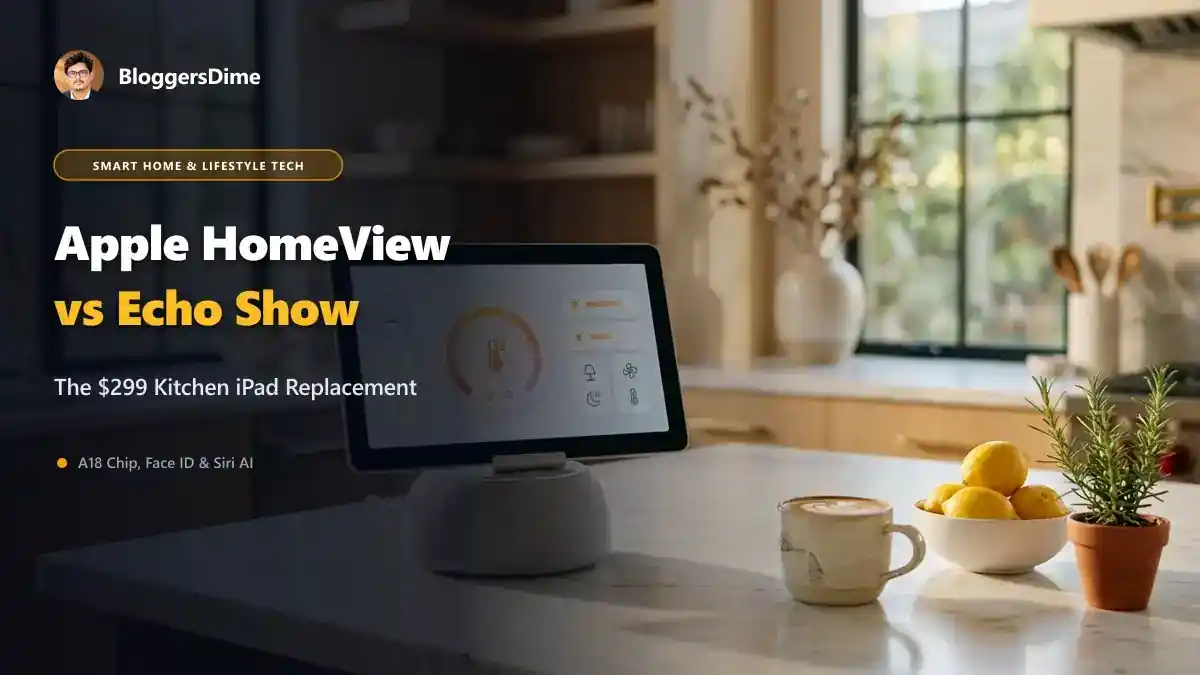
Mounted on a compact, weighted hemispherical speaker dome made of bead-blasted aluminum, the HomeView holds a stunning 7-inch Liquid Retina display via a polished stainless steel swivel hinge. You can tilt the screen effortlessly upward while standing over a cutting board, or angle it downward when seated at the breakfast island. For homeowners who want a clean, floating aesthetic, Apple also offers a magnetic wall-mount plate that clicks flush into entryway or hallway walls.
The screen brightness ranges from a vivid 500 nits in bright morning sunlight down to a whisper-quiet 0.3 nits “Nightstand Mode”, which displays a soft, amber monochrome clock that won’t disrupt your sleep when placed on a bedroom nightstand.
Head-to-Head: Apple HomeView vs. Amazon Echo Show vs. Google Nest Hub
How does Apple’s new smart home display stack up against the market leaders? Here is the direct breakdown:
| Feature | Apple HomeView | Amazon Echo Show 8 | Google Nest Hub (2nd Gen) |
|---|---|---|---|
| Display & Build | 7-inch Liquid Retina + Aluminum Hinge | 8-inch HD touchscreen (Plastic frame) | 7-inch LCD display (Fabric base) |
| Sponsored Ads on Screen | Zero Ads (100% Clean Personal UI) | Heavy sponsored ads & promo cards | Minimal ads (Google Assistant cards) |
| Processor & Intelligence | Apple A18 Chip + Apple Intelligence | MediaTek SoC + Basic Alexa | Solr ML processor + Google Assistant |
| User Personalization | Automatic Face ID Family Profiles | Visual ID (Clunky, limited apps) | Voice Match only (No camera on base) |
| Acoustic Audio Quality | HomePod-grade 360° Dome Speaker | Decent dual stereo drivers | Weak bass, muffled treble |
| Retail Price | $299 | $149 | $99 |
The 4 Killer Features That Make HomeView Special
1. The Echo Show Killer: Absolutely Zero Sponsored Ads
If you own an Amazon Echo Show, you know the frustration: you set a gorgeous family photo as your background, and within ten minutes, Amazon replaces it with an advertisement for discounted paper towels or celebrity trivia. Apple HomeView is fundamentally different: there are zero advertisements. Your screen remains a tranquil digital canvas displaying your iCloud Shared Photo Library, live weather radar, or smart lighting controls.
2. Face ID Family Profiles: One Screen, Unique Personalities
In a busy home, a shared screen must adapt to multiple people. HomeView features an ultra-wide 12MP Center Stage camera equipped with passive facial recognition:
- When you walk into the kitchen, HomeView displays your unread iMessages, your morning commute traffic, and your calendar appointments.
- When your spouse approaches the counter, the dashboard seamlessly cross-fades to their reminders, their podcasts, and their favorite recipe bookmarks.
- When your children approach, it locks into a kid-safe entertainment mode with Disney+ shortcuts and family chore lists.
3. Supercharged Siri with Apple Intelligence
For years, Siri on the HomePod was criticized for sluggish responses and frequent “I found some web results for that” cop-outs. Running on the A18 chip with generous on-device neural memory, Siri on HomeView is conversational, context-aware, and fast. You can string complex commands together in a single breath: “Hey Siri, dim the kitchen lights to 40%, show the front porch camera, and set a timer for 18 minutes for the lasagna.”
4. Room-Filling HomePod Acoustic Sound
Unlike the tinny speakers found in cheap tablets, the weighted base of HomeView houses a custom high-excursion woofer and dual beamforming tweeters. Whether you are blasting a morning playlist on Apple Music or taking a hands-free FaceTime call while chopping onions, audio fills the kitchen with deep, resonant bass and crystal-clear vocal separation.
Real-World Kitchen Life: A Day with Apple HomeView
How does Apple HomeView change daily home routines? Here is what a typical day looks like:
- 7:00 AM (Morning Briefing): As the coffee maker starts, you glance at HomeView. The ambient display shows outside temperature (68°F), your first calendar meeting, and whether the front door is locked.
- 1:00 PM (Doorbell Alert): A courier rings the front doorbell. HomeView automatically pops up a picture-in-picture live video feed of your doorstep with two-way audio talkback.
- 6:30 PM (Dinner & Multitasking): You follow a step-by-step recipe on the screen. When a friend calls via FaceTime, Center Stage keeps you perfectly framed as you move between the stove and the sink.
- 10:30 PM (Bedtime Routine): You tap “Goodnight” on the HomeView. In one click, all household lights turn off, smart locks engage, the thermostat sets to 66°F, and the display dims into subtle amber nightstand mode.
Frequently Asked Questions (FAQ)
What is Apple HomeView and how much does it cost?
Apple HomeView is Apple’s dedicated 7-inch smart home display powered by the A18 chip and Apple Intelligence. Priced at $299, it acts as a central command hub for HomeKit and Matter smart home devices.
How is Apple HomeView different from using an iPad in the kitchen?
Unlike an iPad, HomeView is permanently powered, features a rich 360-degree dome acoustic speaker, uses Face ID to switch personalized dashboards for family members, and runs HomeOS with an always-ready glanceable smart home interface.
Does Apple HomeView display sponsored ads like Amazon Echo Show?
No. One of HomeView’s biggest advantages over Amazon Echo Show is a 100% ad-free, distraction-free display. It only displays your personal photos, calendar, reminders, and smart home controls.
How does Face ID family personalization work?
As you walk up to the counter, HomeView’s front camera recognizes your face and seamlessly pulls up your personal calendar, unread messages, preferred Apple Music playlists, and custom home scenes.
Can Apple HomeView control non-Apple smart home devices?
Yes. Thanks to universal Matter and Thread support, Apple HomeView controls compatible smart lights, locks, plugs, and thermostats from brands like Philips Hue, Eve, Nanoleaf, and Aqara.
The Verdict: Is Apple HomeView Worth $299?
At $299, the Apple HomeView costs more than an Amazon Echo Show or Google Nest Hub. But if you value an ad-free interface, gorgeous industrial design, genuine family personalization, and seamless integration with your iPhone and Apple Home ecosystem, it is worth every single dollar.
It finally retires the awkward “kitchen iPad” and gives modern smart homes the dedicated, intelligent, and private command center they have needed for years.
Leave a Comment
Your email address will not be published. Required fields are marked *