One Nation, One Election: Why the Supreme Court Declined to Meet the Parliamentary Panel

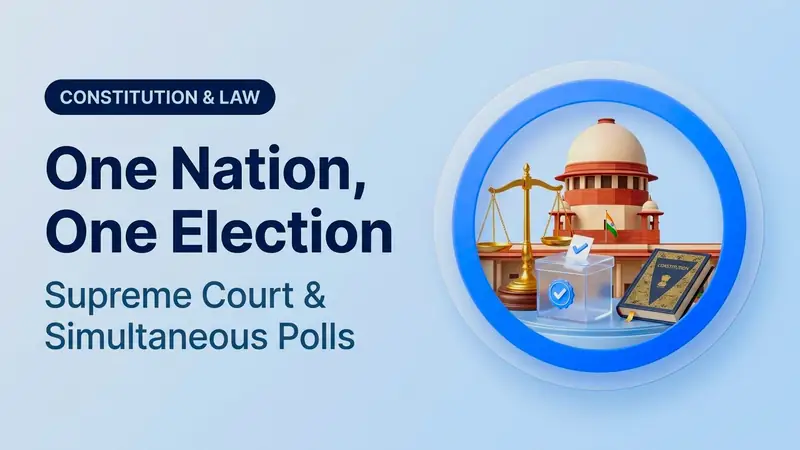
The debate over “One Nation, One Election” has taken a significant institutional turn after the Supreme Court of India declined a proposed interaction with the Joint Parliamentary Committee examining landmark legislation for simultaneous elections across the country.
New Delhi, October 2, 2026: The parliamentary panel had planned an official visit to the Supreme Court on October 6, with its scheduled agenda initially describing an informal discussion with the Chief Justice of India and senior judges regarding simultaneous elections. The visit was subsequently cancelled. Official communications reveal that the Supreme Court administration considered such an interaction inappropriate because the proposed constitutional amendments could potentially come before the judiciary for judicial review once enacted into law.
What is “One Nation, One Election”?
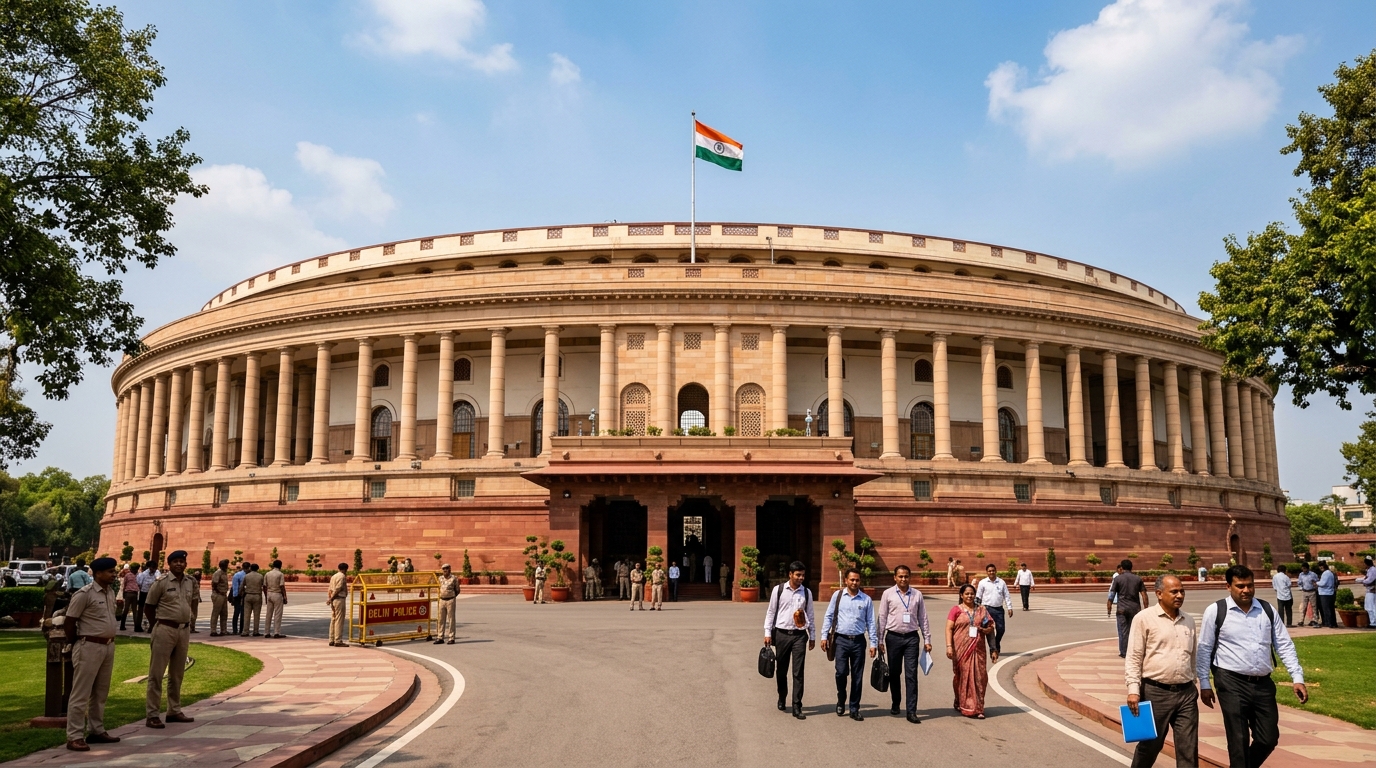
“One Nation, One Election” refers to the comprehensive legislative proposal to synchronise elections to the Lok Sabha (House of the People) and State Legislative Assemblies, rather than holding staggered elections throughout the five-year calendar across different states and union territories.
The Constitution (129th Amendment) Bill, 2024, along with the Union Territories Laws (Amendment) Bill, 2024, is currently being examined by a 39-member Joint Parliamentary Committee headed by senior parliamentarian and BJP MP P. P. Chaudhary. The proposal seeks to establish an enduring constitutional framework under which the electoral cycles of the Union Parliament and all State Assemblies would eventually align into a single harmonized schedule.
Under the proposed framework, if the Lok Sabha or a State Assembly were dissolved prematurely before completing its regular five-year term, the newly elected House would serve only the unexpired remaining period of the existing electoral cycle. This key provision ensures that subsequent general elections automatically return to the common national calendar without desynchronising the system.
Why Did the Supreme Court Decline the Interaction?
At the center of the Supreme Court's decision is the fundamental constitutional doctrine of separation of powers.
Under India's constitutional architecture, the Supreme Court is the ultimate guardian of fundamental rights and the final authority on constitutional interpretation. When constitutional amendments are passed by Parliament, they are subject to judicial review by the constitutional benches of the Supreme Court to ensure they do not violate the Constitution or its Basic Structure.
Constitutional Core: Parliament examines, deliberates, and enacts laws, while the judiciary reviews their constitutional validity when a case properly comes before it. An advance consultative interaction between sitting judges and a legislative committee could compromise institutional neutrality.
Because the proposed One Nation, One Election amendments could inevitably face legal challenges before the Supreme Court after passage, any prior consultation or informal dialogue between sitting judges and lawmakers could raise serious questions of institutional propriety, pre-judgment, or judicial conflict of interest.
The Supreme Court's Secretary General officially communicated that senior judges had deliberated on the proposal and did not consider such an interaction desirable or expedient under these circumstances.
Why is the Proposal Being Debated?
The proposal for simultaneous elections has triggered passionate national debate across legal, political, and economic spectrums:
| Key Dimension | Proponents' Perspective | Critics' Concerns |
|---|---|---|
| Fiscal & Administrative | Dramatically cuts repetitive election expenses and frees administrative and security machinery. | Substantial upfront expenditure required for EVM/VVPAT manufacturing and procurement. |
| Governance Continuity | Prevents frequent policy paralysis caused by repeated Model Code of Conduct enforcement. | National campaign issues might overshadow critical state-level governance priorities. |
| Federal Autonomy | Creates synchronized governance stability across Union and State governments. | Curtailing or extending state assembly terms could impact constitutional federalism. |
Supporters emphasize that holding frequent, recurring state elections requires enormous fiscal resources, repeatedly brings the Model Code of Conduct into operation (pausing developmental projects), and diverts administrative and paramilitary forces away from essential public duties.
Conversely, critics and opposition parties have raised profound constitutional and federalism concerns. Major questions center on whether synchronising elections could undermine the democratic sovereignty of states, dilute local issues behind national narratives, and infringe upon the basic federal structure of the Republic.
Notably, the parliamentary committee has already engaged former Chief Justices of India and legal luminaries in an advisory capacity outside the sitting bench. Former Chief Justices J.S. Khehar and D.Y. Chandrachud have reportedly shared analytical inputs on the constitutional feasibility of simultaneous elections while highlighting specific clauses that could invite scrutiny under the Basic Structure doctrine.
What Happens Next?
The decision of the Supreme Court not to participate in the interaction does not derail or conclude the legislative trajectory of One Nation, One Election.
The Joint Parliamentary Committee will continue its designated mandate: scrutinizing the two Bills, reviewing written memorandums, conducting stakeholder hearings across regional parties, and preparing its comprehensive report for submission to Parliament.
The development serves as a reassuring testament to India's institutional maturity: the judiciary maintains dignified distance from active lawmaking, ensuring that when the law is eventually tested on the touchstone of the Constitution, it will be judged with uncompromised independence.
As deliberations continue over the coming parliamentary sessions, the future of India's electoral calendar will rest on striking the delicate balance between administrative efficiency, cooperative federalism, and the enduring strength of constitutional democracy.
Leave a Comment
Your email address will not be published. Required fields are marked *
Related Articles